
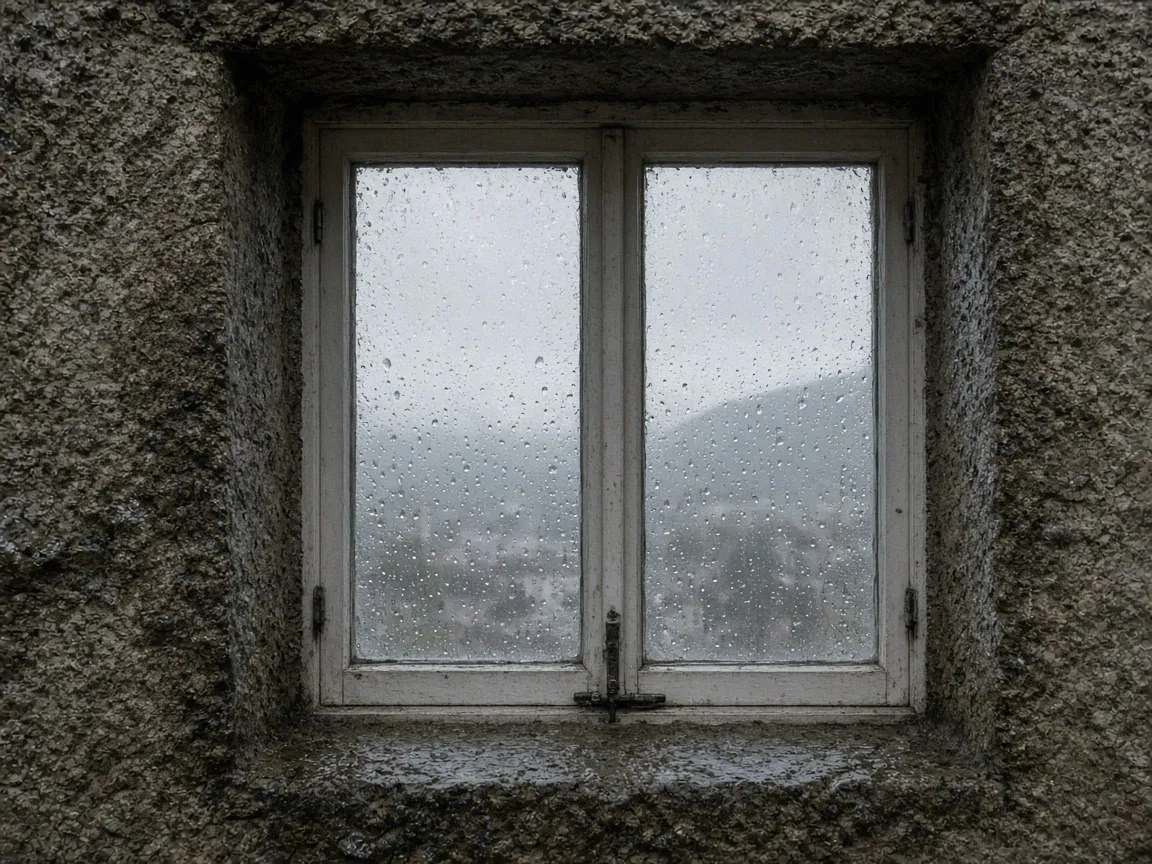
Two different kinds of water
Water on the room face of the glass is the usual winter complaint. Cooking, drying clothes, showers and breathing all put moisture into the air. In a Highland winter the windows stay shut for long stretches. The glass is one of the coldest surfaces in the room, so the moisture drops out there first. That can happen on a sound window. It is a ventilation and heating question as much as a glazing question.
Water between the panes is different. A sealed unit is supposed to keep that gap dry. If mist sits inside the unit and you cannot wipe it off from either room or the outside, the seal has usually failed. Wiping the room and opening a window will not clear it. That unit needs to be replaced. The frame may or may not.
Water on the outside face, on a still morning, is the outside air. It is not a fault. This article does not invent a rainfall figure or a temperature for Inverness to prove the point. The pattern is enough: cold glass, moist indoor air, windows that stay closed.
What a survey looks for
The surveyor asks which face the water is on, which rooms, and whether it is there in the morning only or all day. They look at trickle vents or the lack of them, at extract fans that do not run, and at rooms where clothes are dried. They look at the seal of the unit, the condition of the frame, and whether the opening is weeping from the sill rather than from the glass.
They do not diagnose the house from a single photograph, and this page does not set a building-warrant rule for vents or for replacement. Those are confirmed on the property.
If the visit needs to cover the openings rather than only the mist, that service iswindows and doors in Inverness. The form on this page is the same quote form as the rest of the site.